Search Glorious Little Soldiers
Sunday, 8 June 2025
Catching up on my Reading no 24
Saturday, 7 September 2024
Catching up on my Reading no 23
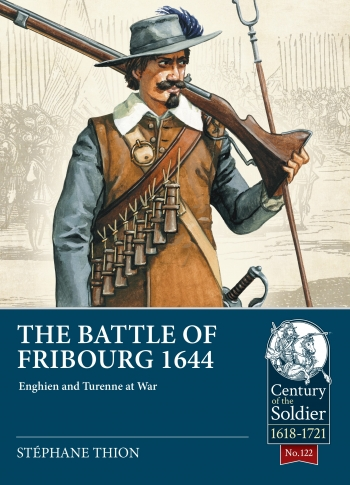
The Battle of Fribourg.
Friday, 9 August 2024
Catching Up on My Reading no 22 - A Bundle from Helion.
It is not often that I buy more than 1 book at a time since I can only actually read one book at a time. Well that is almost true even if I have one book in the lounge, one book in the bedroom and possibly another in the kitchen- though this last is unlikely.
This 'rule' does not of course include the piles of books around the computer that I use to refer to when I am writing.
So most often it is sually 1 book at a time.
However rules are made to be broken escially when Helion have a sale on!
So all three of these Helion books were bought in 2 different Helion sales. one in late june and then 2 more in late July.
So to deal with them in order of arrival.
French Armies of the Thirty Years War 1618-48
The French army of the 30 Years War has interested me for some years and as I have said before that is the fault of Oliver Reed and Gerard Depadieau between them. Oh and just possibly Alexandre Dumas.
Stephane Thion has written on the French army of this period previously for LRT Editions in 2008 and in many ways this new Helion book is an updated and improved edition of that previous work.
If you do not have the LRT version then get this one.... if you DO have the LRT edition as I have - then get this one too, not only is it somewhat better it is much more convenient to handle.
So what do you get for your money- I plumped for the hardback simply because at the then sale price the difference between the two was minimal- a couple of quid- so no worries there.
In 213 pages- including an exstensive bibliography, M Thion takes us through the developement of the French army from its poor start at the beginning of the 30 Years War (when it was not technically involved)through rebellion and civilwar in France to the victories of the 1640s of Conde and Turenne. Organisation is discussed in detail as is equipment. The sometimes confusing changes inboth of these areas is also covered in some detail. This is interesting stuff. The French army has its own foibles and distinctions which make it subtly different from others involved in the Thirty Years War.
For me though the core of the book is in the last 2 chapters which cover the main operations and orders of battle in Chapter 6 and Chapter 7 has a selection of contemporary accounts of various battles involving the French forces which are most useful for getting the 'feel' of the period and the army.
The book is , as you would expect well illustrated with both contemporary and non- contemporary illistrations in black and white some of which appeared in the 2008 work - but many which did not. There is also a 14 page colur section of which 6 pages are flags of fFrench army Infantry units - a total of 24 different flags- engough to keep most wargamers busy building units (I'd have 23 more units to build if I was to make a unit using each of these flags as a source !) The other colour illustrations show assorted troop types and are by Giorgio Albertini one of my favourite Helion artistsand are of excellent quality.
This book will give any English language reader a decent grounding in the French armies of the first half of the 17th century.
Recoomended.
The Battle of Castillon 1453.
Now there was a time , when I was much younger that I was of the opinion that nothing much of interest had happened in Europe after 1485. I had gone all medieval- seeling off my ECW armies and buying a bundle of assorted Hundred Years War. These kept me amused for a few years and even now when I don't have much of an HYW collection the period still holds some interest. So this book by Peter Hoskins was added to the purchase..
Castillion was the death knell of the once substabtial English possessions in France.. This book is quite slim compared to some other recent Helion publications being a mere 125 pages but that does not mean that it is in any way a 'lighteight' volume. The book begins with a swift gallop through the Hundred Years War up to the Treaty of Tours in 1444. This is simply scene setting for those whose first foray into the 15th century this may be.
The next two chapters deal with the changes and reforms to the French forces who would fight in these final campagns. These reforms - especially in the use of gunpowder weapons were fundamental to the French victory. Gone were the days of the hapless French nobility being mown down by English Longbowmen as they struggled through the mud to reach the English line! These reforms are put into a wider European context. The details of Fifteenth century artillery are particularly fascinating along with the photographs of modern reproductions of the medieval weapons. There are some meaty beast of war here !
The following chapters deal with the campaigns that lost the English their possessions in Normandy and the two campaigns in Gascony plus a chapter on John Talbot - Earl of Shrewsbury - the English commander at Castillon which ive a view of the man and his experience before the fatal campaign.
The battle itself is covered - as one would expect - in some detail and is not a run of the mill HYW battle at all. The role of the French artillery was crucial and while you may know how the story ends if you don't buy the book - or even if you do, but that does not detract ffromm its usefulness as a source for the last stages of the Hundred Years War.
The maps by George Anderson are clear and to the point and the colour plates by Girogio Albertin once again are fine and include four pages of heralry and banners...there is a little niggle here, the plates though fine in themselves are perhaps poorly chosen. One each of Talbot himself, his standard bearer, a French crossbowman and Jean Bureau- the commander ofv the French artillery, the other four pages of colour being heraldry and flags- 2 images per page. The plate descriptions are also quite brief though mostly to the point. This is not a problem for those of us who have a bit of medieval military knowledge but for the newcomer to the period perhaps a little more might have been helpful.
A useful book which works on two levels - as aprimer on the HYW and more to the point as a text on the final campaign of that long series of wars. Reccommended.
Now I wonder if I could find the time to do some 40mm Late HYW French .....
Now for the third and final book in this review.
Atlas of the Battles and Campaigns of the American Revolution 1775-1783.
By David C.Bonk and George Anderson.
A long winded title for a largeer than average tome.
George Anderson doing an atlas well that needed looking into. I'd had my eye on this one since its first publication , intending to pick it up at a show if it was up to the mark. However I bought this during the sale and aside from a certainty about the quality othe maps I wasn't sure what I was getting.
I need not have stressed- not even a litttl bit.
This is a serious book 241 pages with an excelent collection of coloured maps of all the major and many of the smaller battles of the American War of Independence or Revolution as the Americans seem to prefer.
The ladscape format is a bit of a pain but once you open the book it becomes obvious why this format was used .
Each engagement battle or campaign is treated , in chronological order, to a double page spread, usually one page of text and one a colur map. Though there are exceptions to this as some pages have less text or perhaps a smaller map. There may also be a contemporary illistrtion or painting to illustrate some of the sections . There are 119 of thhese sections showing battles from Concord to Trincomalee. As you would expect the bulk of the actions are in the continental USA but the West Indies is not neglected nor are naval actions.. The siege of Gibraltar is also covered - though while Suffren's naval campaign in Indian waters is covered the land fighting in India is not- this being the only gap in an otherwise superlative book The usual price tag of around £60.00 is not out of court for a hardback quality volume such as this. Frankly I was much more impressed than I expected to be.
Highly Recommended.
Monday, 8 July 2024
Catching Up on My Reading no 21
Operation Biting by Max Hastings.
Tuesday, 27 February 2024
Catching Up On My Reading- no 20
Those of you who read my ramblings more or less regularly will know of my interest in the military history of the Indian sub-continent. So it will come as no surprise to you that news of Rene Chartrand's latest work sparked considerable interest and caused me to lay out some cash.
I was not to be disappointed.
It is a fairly meaty tome at around 320 page and barely one of them is wasted.
The activities of the various permutations of the French East India company are covered in some detail for the first time in English and most importantly all in one place. This obviously covers the Indian sub-continent but less obviously Africa, China Thailand Madagascar and Louisiana.
In 21 chapters and 3 appendices M. Chartrand takes us through the wars and armies of the Compagnie-des Indes. Not only the obvious conflicts against the British in the 18th century but less obvious conflicts against Spain in what is now the US state of Florida and their battles with the First Nations in other parts of what would become the USA. The scholarship in impressive and the emphasis is of course of French sources which is as it should be.
For me however the meat of this fascinating book were those chapters concerned with India. Here the success of the book is to bring all of the disparate information under one set of covers. Speaking for myself I had around half- or a bit more of the information on uniforms in assorted other sources- some in M. Chartrand's other works but this volume both brings all of that into one convenient place and corrects some misconceptions. For example more than one source refers to French Company troops dressed in the usual Grey white coats- in fact this was the exception rather than the rule- when fighting the British the French Company troops in India would more often be dressed in Blue uniforms.
As well as campaign narratives chapters on weapons and organisation - both of the European and local troops are covered in some detail. I will have no trouble organising my French forces for Indian wargames with this book to hand.
Physically the book is well up to the usual Helion standard. Indeed rather more sumptuously illustrated than some. There are 12 colour plates by Patrice Courcelle as well as 18 other pages of colour illustrations. some contemporary and some not. All are to the point. Add to this a large number of black and white illustrations- of which only a minority were familiar to me and this is another winner from Helion and from M. Chartrand.
There were only a couple of jarring notes. Both linguistic and very minor first the various French trading posts which English sources would refer to as 'Factories' are referred to as 'lodges' . Slightly more jarring is the reference to Indian matchlock musketeers- who would be 'peons' or 'barkanzys' or 'buxerries' depending upon where they were from and in whose service they were- as 'fusiliers' which is a bit confusing until you get the context. But that is merely nit-picking and does not in the least detract from and excellent book.
Very Highly Recommended.
Tuesday, 8 August 2023
Catching up on my Reading 19 . A Blast from the Past.
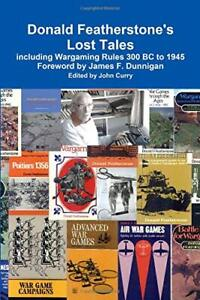
Donald Featherstone's Lost Tales .Edited by John Curry.
I've had this volume for a while and never thought of reviewing it until recently. However as a book by one of the 'originators' of the wargaming hobby as it stands today it deserves a second and even a third look. Regular readers will know that I have a soft spot for 'retro' wargaming, often preferring it to some of the gamesey history free twaddle that masquerades as 'historical wargaming' in this 'modern era'. Now that is not the same as saying that ALL modern 'games' are tripe - they are not- but like the curates egg- the modern era of historical wargaming is only good in parts.
In some ways it is a strange book, combining as it does real history and wargaming.
The real history consists of Featherstone's 'War Memoirs' and a short history of the Army Tank battalion he served with . This last has several gameable scenarios within its narrative as well as the rather unusual organisational quirks of 51st Battalion Royal Tank Regiment with its mixture of Sherman and Churchill tanks while in Italy. There is also an essay on 'The Birth of Modern Wargaming' which should set the record straight concerning how what we have today began in the late 50s /early 60s which 'Millenial wargamers' should read . The picture of wargamers of yesteryear in Jackets and ties will raise a smile or three!
As for the 'Wargaming' bit well the main body of the book is a block of Featherstone rules actually a total of 12 sets by either Featherstone himself or Tony Bath covering most of the popular and a couple of more obscure periods. Some a very simple, even simplistic, and many are also rather skeletal in terms of the actual amount of rules given. These are not 'games' in the sense many expect today. They assume some pre-knowledge of period and some suspension of belief- especially with regard to Command and Control and formations This does not mean they are useless. A decent Umpire can use their vey simplicity and skeletal nature as a toolrack to hang his scenarios upon adding scenario specific rules as required. Games using these rules will be fast and bloody- especially in the Horse and musket era. There are no set unit sizes here although there are some suggestions.
Arthur Harman's useful introduction to the rules section of the book points out many of the possible pitfalls and inconsistencies and his point about the suitability of these rules for small actions is well made and to the point and the lack of period detail is also mentioned. However I would opine that such lack may at times be advantageous to the well read Umpire, and as a fan of 'Active Umpiring' the very simplicity has its uses.
To be honest it is unlikely that I'd umpire a game using these rules without some amendments more than once or twice ,as usual I treat rules as a toolbox and feel free to amend as alter as needed in much the same way Donald Featherstone advocated.
So yes I recommend this book to chaps who have an interest in the development of our hobby. Don was after all one of the pioneers.
Friday, 4 August 2023
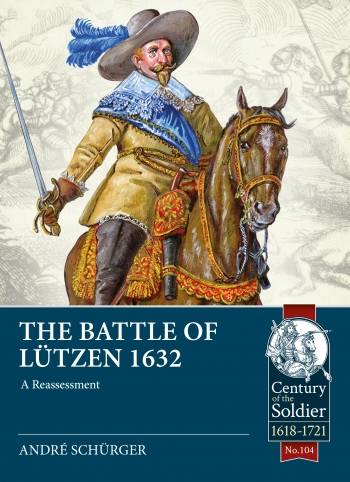
Catching up on my Reading 18. The Battle of Lutzen A Reassessment by Andre Schurger
Friday, 30 June 2023
Catching Up On My Reading 17.
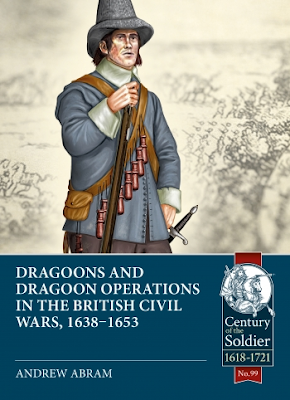
Dragoons and Dragoon Operations in the British Civil Wars 1638-1653. by Andrew Abram.
Helion- Century of the Soldier series no 99.. Softback 334pp.
It has bee a while since I have done a book review on this blog- mostly because I have been writing rather than reading but I picked this one up at the Partizan show in May and have finally got around to reading it.
Another big chunk of a tome from Mr Abram and a pretty dammed good chunk it is.
There are twelve chapters which take the reader through all they might need to know about dragoons during the Civil Wars. in England and Wales- Scotland being only mentioned insofar as Scottish troops in England are concerned. These mounted infantry were a vital tool in fighting the campaigns of the mid- Seventeenth century.
There is plenty of detail here. Arms, dress, horse management, and unit organisation are all covered in detail as are methods and operations. Anyone with more than a passing interest in the Civil Wars will need this adding to his library.
As with his previous books I found Mr Abram's research impressive down to the officer and sometimes lower ranks of individual dragoon companies.
This book will repay careful study.
Niggles- well yes . Illustrations are on the thin side, and some of them seem a bit incidental such as the covers of pamphlets that are-very usefully- quoted from. There are no maps nor any colour plates other than the cover. This one is for military historians rather than wargamers, but that is as it should be and these niggles do not really detract from an otherwise excellent book.
Recommended.
Tuesday, 10 January 2023
Catching up on my Reading -16. The Battle of Rocroi.
Now off and on I have something of an interest in the 30 Years War- though often not the bits that you are supposed to be interested in. No Swedes for me for a start.
No my main interest is the French army of that period and it's all Oliver Reed's fault aided- though he would not know it- by Gerard Depadieu and George MacDonald Fraser- and never forgetting Alexandre Dumas - but there you go all sorts of things can spark an interest.
So the new publication from Helion on the Battle of Rocroi- written by Alberto Raul Esteban Ribas- an author previously unknown to me really sparked my curiosity telling the tale of Conde's great victory for the French over the mighty Spanish army in 1643.
In the Helion 'Century of the Soldier' series (no94 to be precise) the volume is up to the usual Helion physical standard that we have come to expect. in all 167 pages.
First off Mr Ribas knows his stuff. The breadth of his knowledge of the various French and Spanish sources for the battle and the campaign is impressive. The author has done his research- this show in the extensive bibliography but more than that the book is well written and detailed - even if the prose is occasionally a tad ponderous this does not in the least detract from the scholarship.
The treatment of the actual battle is very detailed indeed, including, as it does, a full order of battle for the French and as full an OB for the Spanish as can be gleaned from the sources. Mr Ribas takes us through the fighting almost blow by blow, citing the various anomalies in the sources which have caused some confusion to scholars over the years. This detail is never tedious and repays careful reading, but let us be clear, you will need to concentrate. I personally was left with the conclusion that the Spanish lost the battle by missing their chances for victory while the French won by taking advantage of every chance they had. However you will need to read this excellent book to get the benfit of Mr Ribas's narrative and conclusions - no spoilers here !
The narrative is backed up by a fine selection of contemporary illustrations which show us what the troops were supposed to look like or how 17th century artists saw them. The maps by George Anderson are in their usual clear style and make the narrative easier to follow.
If I have one reservation it is the colour plates. They are well drawn but perhaps a bit pedestrian and suffer from a surfeit of blue but this is my only reservation in an otherwise excellent and useful book .
Definitely recommended.
Now all I need to do is get the 40mm French and Spanish on the table !
Saturday, 10 December 2022
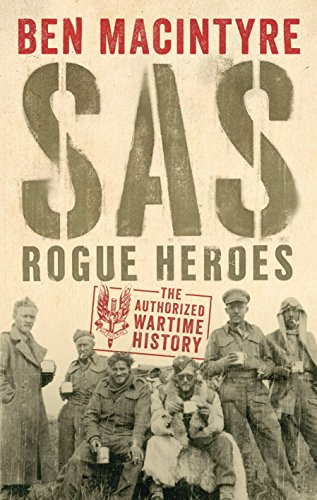
Catching Up On My Reading 15 - SAS Rogue Heroes,
Now I have had this book since it came out in 2016 - my wife bought it for me back then and yes I have read it . So this is really a re-reading. I did this because I wanted to compare it with the TV Drama of the same name and vaguely the same subject. For the record I find the drama entertaining, but also quite irritating, historically speaking, the way it fudges and distorts and misinforms for dramatic effect but then as it is a drama with a different target why would I expect anything else?.
Dramas often have to be simple- like the target audience! After all the punters need to know what they are buying. But sometimes the dumbing down and fictionalising goes to far in order to fit the formula that the punters will buy into. This is especially true of the TV drama very very loosely based on MacIntyre's rather good book. Take the 'Benghazi raid' of episode 5 of the drama Yes Randolf Churchill was there No there was no firefight. No they did not dress up in German Uniform . The true version is in the book and frankly is a better story than the violent crap on the screen but the TV director seems to want to cater to an audience that have the attention span of a backward haddock and need to be 'stimulated' by loud noises and bright lights every minute or so .
The book of course is far better than that in the same way a painting in the gallery is better than a postcard of it in the gif shop.
The evolution of the SAS is explained in some detail with the development from L Detachment to two British regiments two French and a Belgian . outlined and with no small amount of courage and sheer lunacy and horror - but without the gloating tone of the TV images. Yes some of the incidents of the SAS's desert war are 'reported' with some truth in the drama but many even if mentioned were telescoped and trivialised . However the book has a seriousness which the drama conspicuously lacked. To portray the early SAS simply as a bunch of irresponsible pirates is to give them less than their due.
Mackintyre DOES NOT do this in his excellent book so bin the TV series and read the words- even if you have to use your fingers for the longer ones !
Monday, 3 October 2022
Catching Up On My Reading 14
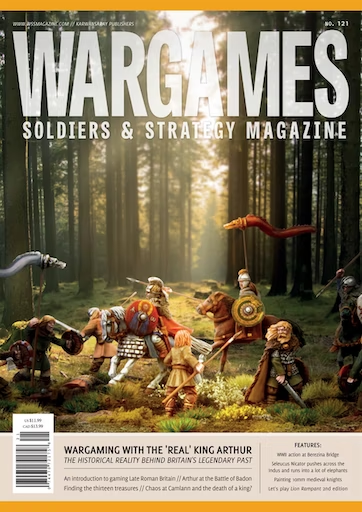
These days I don't see many wargames magazines. I advertise in MW but no longer get a voucher copy merely a link to pocketmags which is a right faff and I can't be bothered. WI -I have not seen a copy of since before the pandemic but visiting the site deluges you with so much shazam - kapow again I can't be bothered to faff about when I have books to write and soldiers to paint - as well as a business to run.. So the only mag I now see with any regularity is Wargames Soldiers and Strategy- for my money probably the best of the current crop.
Now to be clear magazine no longer occupy the place they once did. I have binned many of my old mags only keeping those that contained useful articles- which tends to mean magazines of some age. Much of the stuff I recently sent to the recycling was post millennium, usually because I find so much of that stuff intellectually bereft.
WSS is not like that at all. It mostly treats you like an adult. The current issue is no different and follows its usual pattern with a decent selection of reviews and a good selection or articles presented in the usual eye-candy heavy manner. All in '28mm' and all in the 'received style' that the punters seem to expect.
The Specialist subject this issue is the 'Wars of King Arthur'- the possibly historical one rather than the certainly mythical version-and the articles give a decent nod to the relevant sources before getting on with laying out the scenarios. Though the subject is not all that common the format for the articles follows the usual path and while being ostensibly not aimed at any specific rule set gives hearty nudges to the supposedly more popular sets.
There is a fine article on 'realism' by Alex Webster which will repay careful reading - despite its slight slant towards WW2- and the rather odd choice of Napoleonic eye candy- this piece contains useful stuff. However I did think as I read the piece that most of the problems the author lays out , all of which are perfectly to the point, could be solved by the use of an Umpire. I have never quite understood the antipathy that many gamers seem to have towards umpires and games masters in the historical arena, nor the seeming dominance that is placed on two- player games. After all a decent knowledgeable Umpire will not only make the game run more smoothly but, if he knows his work, he can get the most fun (assuming his players are adults of course).
Jeff Jonas' piece on the wars of the Successors - though not my thing is also a well done piece and worth a read. Nice pics of Elephants though my own hathi are either mounts for the rajas or there to pull the heavy guns- but not until I finish painting them.
| One of my Elephants doing his duty. |
The Irregular column caught my eye as it highlighted wargaming in youth work and despite an occasionally patronising tone accidental I assume, still had some interesting things to say about 'teaching games' and how to do it - some of which I already use when Umpiring and some of which I had not thought of but will use as occasion serves.
| I can do Heraldry- even though it might drive me blind- this on a 30mm flat. |
As for other stuff the How to on painting medieval troops might be useful if you know nothing but to be honest articles such as these rarely hold my attention despite the quality of the painting. I can do Heraldry though I accept that some chaps find it difficult. Much the same goes for the modelling Bocage piece I have a tables worth if I need it though again the writer knew what he was about.
I must admit though that I'm not keen on the 'primacy' of 'games mechanisms' in today's hobby as exemplified the the 'Let's Play piece- they chose Lion Rampant 2 and lauded it almost to the skies - now since I thought LR1 was mostly lightweight cobblers largely because it slaved everything to a silly points system and therefore forced non historical organisations upon you then this was not going to impress - it didn't.
Despite the above all in all a pretty decent mag that gives even a 'veteran' wargamer like me something to read. Can't be a bad thing. Recommended.
Saturday, 16 July 2022
Catching up on my Reading 13.
Rise of the Sikh Soldier by Gurinder Singh Mann.
It is always good to get a different viewpoint, an alternative opinion. Lets face it the same old same old becomes monotonous. That goes for many things including views of history.
You do get tired of the Euro- centric view or even a North-Americano- centric view and yes tired of an Anglo centric view as well.
So when this new Helion title swam across my ken I was immediately interested not to say fascinated by the premise.
Regular readers of my blog will know of my interest in Indian Military History -and not just the British segment either- indeed I have written upon the subject and am currently engaged upon another such so I suppose you could say I have form.
Not as much as Gurinder Singh Mann though, who has studied Indian and particularly Sikh history for many years.
So what do we have?
In 12 Chapters, Seven appendices and 260 plus pages we have laid out before us the story of the Sikh soldier from the beginnings in the late 17th century until what might be termed 'the high point of the British Raj' in 1900.
The early chapters I found especially fascinating detailing , as they do, the Sikhs fight for independence against the once mighty Mughal Empire. A Sikh army, for example, occupied Delhi for a time in the 1780s with an army of perhaps 30,000 cavalry. In the snakepit that was the political life of northern India in the 18th century they fought Mughals, Marathas and Afghans at various time as well as - quite often , each other as the various Misls or 'Commonwealths' fought for territory. Yet despite not infrequent internecine squabbles the Sikhs would almost always unit against external enemies.
The book also details organisation and tactic of the early Khalsa before that formidable army's partial 'Europeanisation' under the Sikhs greatest leader Ranjit Singh during the first three decades of the 19th century. Further detailing the numerous campaign that Ranjit Singh and his generals both European and Sikh fought to extend the Sikh Empire throughout the Punjab and beyond.. The two short but bloody wars against the British are also covered- as one would expect but from the Sikh perspective. This certainly added depth to my Anglo-centric knowledge of these campaigns. The final chapter give a brief rundown of some of the campaigns of the later 19th century in which the Sikh regiments of the British Indian Army took part
Maps and illustrations are excellent including many I had never seen previously and the discussion on the flags of the Khalsa I personally found very useful indeed. Gurinder Singh Mann's scholarship and knowledge of Sikh history is evident throughout and his use of Sikh sources often unknown to me add depth especially to those parts of the story I thought I knew.
I have no intention of going through this fine book chapter by chapter- you should buy it to do that. Suffice it to say that it belongs on any bookshelf with an interest in Indian Military History and of course of Sikh History in particular.
Recommended.
Thursday, 5 May 2022
Catching up on my Reading -12
Wargames Soldiers and Strategy.
I have not reviewed any magazines for a couple of years. That is mostly because I don't see that many these days but also because those I do see often have so little content once you get past the sometimes useful product reviews.
So it was with no little pleasure that I discovered WSS no 119 actually had something to read in it once I got past the useful product reviews.
The featured subject this issue is Napoleon's Imperial Guard and the mag has 6 articles which feature various aspects of the Guard . These 6 include 3 scenarios for Napoleonic games none of which patronise me or treat me as if I was 14, this in itself is a major plus point as frankly I get seriously tired of magazine articles that assume I need fingers for the long words. The article on the Battle of Hanau was particularly interesting - an excuse to use Bavarians in an historical context.
Other articles include one on early Tudor armies US Paras in Normandy and a nice one on the Welsh Marcher Lords - actually Normans of course with a scenario for fighting the Welsh..
All of these articles had a little historical intro to set to scene and introduce a little context before getting into the scenario - if one was included which for the 'how to' on the Tudors it was not.
As usual the mag is filled with eye candy - all in the 'received style' but mostly none the worse for that though perhaps some different styles of modelling and painting could be included once in a while - mind you the tiny 2mm(?) Romans and Germans were certainly different. Still it would be nice to see some 15mm , other than tanks, once in a while.
Rick Priestley's 'This Gaming life' column definitely struck a chord - much of its purport was on the use of Umpires - which is something I have been in favour of since at least the 1990s- all the games featured on this blog are Umpire controlled and I wrote and article on Umpiring for MW several years ago now. Nevertheless it is nice to see someone else advocating a similar set of methods.
If I had a complaint it would be that on the whole the articles were on the short side - but then that seems to be the prevailing fashion these days. Some seem to find more that a couple of thousand words too much for the brain.
Still a fine mag indeed. Best mag I have seen for some months. . Recommended
Thursday, 7 April 2022
Catching Up on My Reading 11
Magazines and Journals.
Had a small crop of magazines and Journals recently all of them interesting and informative in their differing fields and while all 3 had fine historical content, only 1 had anything directly to do with wargaming, which in the event was no bad thing.
Indeed these days I rarely see any of the 3 glossies- even when I advertise in Miniature Wargames the 'voucher copy' is an e-copy via Pocketmags which isn't ideal, bearing in mind my eyesight problems. Even having said that, said glossies rarely have anything in them to engage my interest these days beyond the reviews. Many of the articles seem irredeemably lightweight or about yet another 'game' with 'innovative mechanisms' and quite possibly more sodding Zombies (Gawd 'elp us) which I am never likely to be interested in as it was some time since I was 12.
No longer my idea of 'fun' , if indeed it ever was. No I prefer- and mostly have preferred (barring some occasional light relief) something with a little more depth rather than more of the same old same old.
So on to the three publications under my spotlight for this episode
.
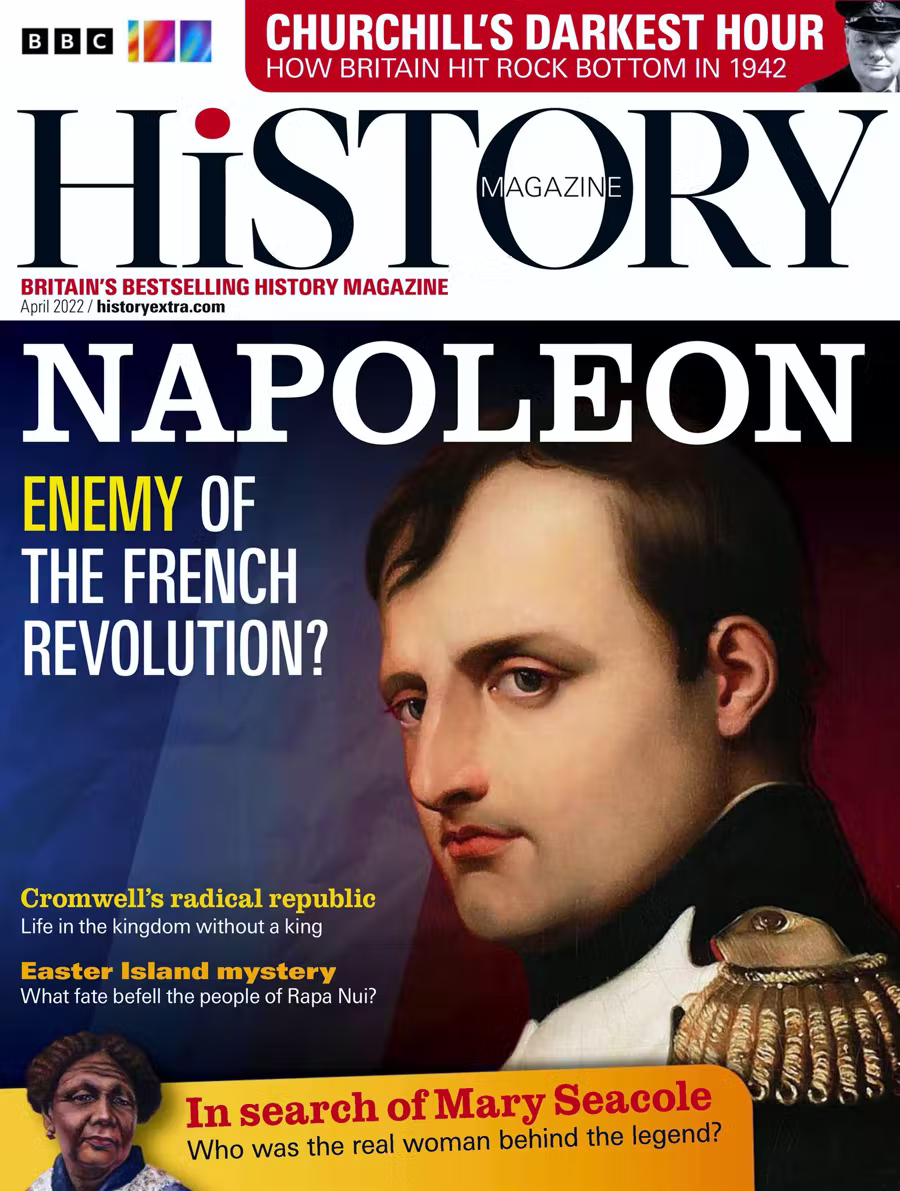
First BBC History magazine. This is a monthly that my wife bought me a subscription for a couple of Crimbos ago and yes I have kept on taking it because it ALWAYS has something of interest within its pages. This time the cover says it best but there is also a fascinating article on the English Republic as well as numerous reviews. Now I don't always agree with the sometimes desperately politically correct attitude of some of the writers BUT the articles make you think which is rather the point. Another plus point is simply that much - though as you can see not all- of the writing has no military content. This often gives a little depth and context to what we do by showing that @there are more things in heaven and earth' that there are on the wargames table.
Now something which is very definitely military history is issue 400 of the Journal of the Society for Army Historical Research. I have collected back issues of this journal for several years (it began in the 1920s) and joined the Society a few years ago for the Journal and the occasional special publications. Articles are always scholarly and frequently fascinating whatever period of the British army and its campaigns they cover. Samples from issue no 400 include the West African regiment 1898-1928- some interesting stuff for Colonial gamers here. There are also transcripts of the Letters of Lt-Gen Sir Henry Pringle - during the Peninsular War. Pringle was not one of the best known of Wellington's generals so it is nice to see him featured here. Other articles in this issue include and examination of one of Lady Butler's lesser known works - together with a good quality colour reproduction- and and examination of the comparative treatment of Russian and British veterans in the 18th and 19th centuries which while interesting of itself was a bit esoteric even for me. The book reviews are also of use - indeed a review here has decided me against buying a book - on the 16th century English campaigns in Ireland as the reviewer gave the book such a going over that I quite lost interest.
Finally Arquebusier - the Journal of the Pike and Shot society will be well known to more than a few of you. and is the only one of the 3 journals under consideration that has direct wargames content. this issue - volume 37 no 5 has plenty of interest - my particlar favourite being a list of the English army in Ireland in 1629 but also and examination of the Duke of York and Albany's regiment of foot in Charles II's army. Direct wargame content in the form of a review of a set of rules called 'For King and Parliament which is a card driven system using a squared terrain which the reviewer rather gushes over.- he is obviously a fan. Other gushing reviewsare present but also anotherwhich put me off buyng a book I was interested in so it all works out in the end so to speak.
I'd recommend all three of these magazines and journals for various content- depending upon your precise interests- thogh my personal favourite this time would be the Society for Army Historical research- though Arquebusier runs it a reasonable second.
Sunday, 20 March 2022
Catching Up on My Reading 10
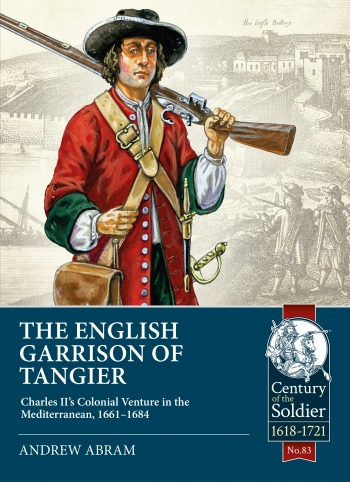
Another late17th century title came to my attention - from Helion naturally- this one being Andrew Abrams latest . concerning the English occupation of Tangier during the reign of Charles II.
Now unlike the last book I reviewed concerning the Late 17th century this one is no lightweight gallop through the period, and of course is all the better for that. After all not all of us HAVE to be assumed to have the intellectual capabilities of a backward haddock surely?
No this one is for chaps who don't need to use their fingers for the long words. Mr Abram can read and write- no mean feat these days, and it shows in the 200 plus pages of. hard information within these covers .
The English Garrison of Tangier - Charles II 's colonial venture in the Mediterranean 1661-1684, tells you exactly what it is about right from the first page.
The depth of research is excellent in 12 chapters plus 10 appendices Mr. Abram gives us a picture of Charles II's small restoration army and it's first colonial adventure. The 9 page bibliography gives us a hint of where all the information comes from.
Tangier came to Charles 11 as part of his dowry from his new Catherine of Braganza - his new Portuguese wife- Bombay came to be a colonial possession by the same route but that is another story. The plan for Tangier was to make it a trading hub and entree into the hinterland ... but the local population were not that keen to say the least.
So Charles II was saddled with an outpost which needed a small army to keep it safe or indeed often not so safe.
The book give us some serious detail on the garrisonand a good amount on it's Moorish opponents.. There are, for example, 54 tables giving establishments , officers names , rates of pay and provisioning details type of guns in the various forts, all the information one might need to run a brigade sized 17th century army. should you wish to do so.
As you might expect there is a fair amount of info on 17th century logistics peculiar to the Tangier Garrison but there is also a detailed narrative of the various actions fought by the garrison against the Moorish forces and the reader quite quickly realises that Tangier was a dangerous place, if the Moors didn't get you then disease, bad food and too much alcohol might.
Abram makes it quite clear that Tangier was no easy posting and that conditions were often grim, the garrison was frequently ignored by the home government and often held on only by the skin of its teeth and because the Moors often had their own political turmoil.
The book is profusely illustrated in black and white with copies of contemporary illustrations and pamphlets. there are also form very fine maps. One small niggle- although the Garrison's uniforms are described, as is the dress of their Moorish opponents it would have been nice to have some modern artwork to put these descriptions into context. This being especially true of the Moors. However that does not really detract from the overall worth of the meaty 380 pages in this excellent volume.
There are sufficient battles, actions and skirmishes here to fascinate and wargamer what wants something out of the usual rut but this book is much more than that with its depth of detail and strong narrative . For those interested in the early history of the British army it is a mine of useful information.
Highly recommended.
Monday, 3 January 2022
Catching up on my Reading 9
Brazen and to the Point.
When I was at school a very long time ago they still had history lessons where they taught you stuff. Now WHAT they taught you was often later proved to be twaddle but that is beside the point. You were expected to regurgitate it-twaddle or not- so you could pass your exams.
Some of this was actually Military History of a sort , including the Battle of Minden during the Seven Years War where apparently 6 battalions of British infantry shot the whole French Army to bits in the supposedly usual manner and won yet another famous victory .. oh and there were some German chaps on our side who helped a bit.
Over the years of course you find out that it wasn't quite like that ......
Nevertheless I suspect it was partly the twaddle they taught you in 1972 that was the initial spark for my interest in the British contribution to the Seven Years War which despite some periods on the back burner has never completely left me .
So it was with considerable interest that-
Like a Brazen Wall- The Battle of Minden and its place in the Seven Years War
by Ewen Carmichael came to my attention
Published by the ever busy, Helion this is a meaty tome of some 265 pages of which not one is wasted.
I do sometimes think that the campaigns against the French in Europe during the Seven years War often get a bit of a raw deal compared to the campaigns of Frederick the Great against the Austrians and Russians. This books goes a considerable way to redressing that imbalance.
The author clearly knows what he is about. In 16 Chapters and 6 Appendices Mr Carmichael (actually a retired Major-General and currently Chair of the Society for Army Historical research) tells the story of the famous battle and puts it firmly into the context both of the campaigns against the French and indeed the overall context of the Seven Years War in Europe.
But this is not merely an overview, the detail is all there. Orders of Battle, Uniform details,(these encapsulated in a collection of tables) lots of contemporary quotes- often from European sources as well as British ones.. The depth of Mr. Carmichael's research is all there for the reader to see.. This is a formidable book telling a sometimes complex story. What becomes admirably clear is what a very mixed force the Allied commander, Ferdinand of Brunswick actually had to draw upon and how few of his troops were actually British. The vast bulk of Brunswick's army consisting of Hanoverians, Hessians, Brunswickers and even a few Prussians.
It is this depth of research that I found most impressive but there is yet more. There is also a Guide to the Battlefield with some useful photographs and some delightful colour plates by Patrice Courcelle showing uniforms of some of the combatants. Add to this a decent crop of maps showing both theatre operations as well as battle details and we have a book that students will rerun to again and again.
Niggles - well no not really , if I was picky I could have wished for a few more contemporary illustrations but that really is my only 'complaint'. I heartily reccommend this book to any interested in the Seven Years War.
Saturday, 4 December 2021
Catching Up On My Reading 8
Back in 1978 I did a small demo wargame on the First Afghan War based loosely upon the Battle of Beymaroo.. I have maintained an interest in this conflict ever since, just another facet of my continuing interest in the Indian Armyand Indian Military History. So a new book on the war is very welcome indeed.
Published by Helion 'Dust of Glory' by Bill Whitburn is a meaty tome of over 400 pages, not one of which is wasted.
It is well known that the First Afghan War was not the East India Company's- or indeed Britain's finest hour of the first half of the nineteenth century, with hindsight one can see that interreference in Afghanistan never seems to end well- not that politicians ever seem to learn from History. The war inspired at least 2 major paintings - a print of Woolen's @Last Stand of the 44th at Gandamack' adorns my sitting room wall and of course Lady Elizabeth Butler's 'Remnants of an Army' will be familiar to many.
The basic story of the First Afghan War has been told many times. George Bruce has done it Peter Macrory has done it and more recently , this century, William Dalrymple has told the tale each in their own way. How the British invaded Afghanistan to replace its ruler with one more controllable and how, due to treachery, mismanagement and sheer incompetence they were hounded out of the country by the Afghans loyal to their rule Dost Mohammed.
Mr Whitburn's book treads this travelled path with significantly more military knowledge than most. Not only that, the book is by no means as narrow in concentrating on the occupation of Kabul and the fallout from the disastrous mismanagement political, military and fiscal as some of the others of the genre.
We get to know what was happening in other parts of the country- in Kandahar for example and other outlying garrisons. There are many other battles and actions outlined often in detail and orders of battle for the British and sometimes the Sikh forces and numbers for the Afghans and sometimes with maps than one usually sees. This is well done and very useful indeed.
Equally this book is by no means as 'Anglo-centric' as some earlier narratives, we learn about the Sikh state's involvement in the debacle- they were Britain's ally in the enterprise-and about the small army known as 'Shah Shuja's Contingent' which was supposed to be the military force of the replacement ruler but was in fact a small carbon copy of the East India Company's army which formed the bulk of the invading forces. Some of these units would continue in EIC service after the war was over.
This book is full of fascinating detail and anecdote and will repay careful study.. It is well illustrated in both colour and black and white and included a good few illustration I was unfamiliar with or in some cases had seen previously only in black and white in older volumes. George Anderson's maps are up to his usual fine standard.
Niggles? Well one or two. At least one of the illustrations is miscaptioned- page 37 has a full page plate captioned 'Afghan Warriors'. when they are, by their dress and weaponry clearly Sikhs- possibly Akalis or Nihungs and are clearly differently dressed from those figures in other plates who ARE Afghans.
It might also be said that some of Mr Whitburn's frequent digressions can get just a little tortuous. I'm still unsure for example what Peterloo and the Bristol Riots have to do with the First Afghan War. Yes other such digressions are both interesting of themselves as well as instructive. I know more about how the East India Company was governed than I did before and some of my own misconceptions have been washed away.
I liked the book and over time will study it with more care and I'd recommend it to anyone who has even a passing interest in the military of India or in the campaigns of the British Army.
Sunday, 11 July 2021
Catching up on my reading 7
Last Christmas my wife Carole bought be a subscription to the BBC History magazine. I'd bought the mag of and on from newstands for several months before and found it always interesting and occasionally fascinating. Now the is not a Military History mag but rather general History and frankly all the better for that. Let's face it quite a number of the wargaming fraternity have a pretty narrow view of History - just like much of the general population only more so - therefore getting a more rounded view of the past cannot be but a Good Thing (Sellar and Yeatman take note !) I may not always agree with the writers but they make you think which again must be accounted a Good Thing. The precise worth of individual copies will depend upon individual tastes but in the above issue alone we have mention of - Old Noll as you can see, but also Mary Wollstonecraft, The Tokyo Olympics- 1964- and Slime mould to mention only four highlights in a magazine that is full of both longish readable articles and fascinating little snippets. Past issues have included pieces on the Battle of Thermopylae, the Peasants revolt and the Sikh War.
All issues also have a plethora of book reviews and notices of historical events and event of interest to the historically minded. Never had a totally duff issue yet... wish the same could be said for wargames mags.
Wednesday, 14 April 2021
Catching Up On My Reading 5
Now as a general rule I hate reading wargames rules. The deliberately difficult language supposedly designed to stop players cheating added to often silly acronyms which have nothing to do with the period in question, but make the "game designer" feel clever (what are PIP, MU's and Fast Knights anyway and why the hell should I care?), make toiling through the average set of rules only fun to those who arrange their socks in numerical order and find half a shandy the epitome of excitement.
So it may come as something of a surprise to see this review of a set of rules from the Helion stable that does not follow that well worn and oft repeated path.
In Deo Veritas actually reads very well indeed.
In these strange time reading is about all I can do with them anyway but suffice it to say - Gentle Reader- that once you can get to a wargames table they should also play pretty well too.
For the record the rules are for large, fast playing, 17th century battles in the smaller scales- so 15mm and below- and to my mind should do that very well. To me there are a few distant echoes of a 1980s-90s big battle set called Volley and Bayonet - which back then I played quite a bit of and enjoyed. In Deo Veritas being focused on the 17th century of course have significant differences but there are still echoes in the base sizes but the writer does acknowledge his debt to that ruleset and its writer Frank Chadwick.
Using this set it becomes possible to refight such large 17th century battles as Lutzen and Marston Moor- that latter being one of 6 historical scenarios included in the book. The accent is on the history- although for the gamey types there is a points system if you must.
All the appropriate troop types are there from Spanish Tercios to late 17th century regiments, concentrating on Western style forces. I suspect a supplement might be needed to cover the Ottomans and the Poles and the Muskovites for example though with a bit of thought many if not all of their particular troops could be organised or this game system. The accent here is definitely on "big picture" rather than regimental detail but that is as it should be for a "big battle" set such as these
Physically the book is up to the usual Helion standard though I could have wished for some captions on some of the eye-candy photos. However at about half the price of some of the hardback paving slab sized rulesbooks you see about the place this softback is good value.
My preferred option here would be for the 30 Years War in 10mm and for that or the ECW or for much of the 80 Years War and a decent chunk of the various Northern Wars these would fit the bill.
Definitely recommended .... Now all I need to do is to get Jim to paint up a bundle of 10mm TYW troops ... well I do have most of the troop types in the Old Glory 10mm range so it might be rude not to/ .....
Monday, 1 March 2021
Catching up on my reading 4
One of the several downsides of being a relatively studious chap in today's whiz-bang -kapow world is that so much of the wargames reading on offer is pretty lightweight. It is one of the reasons I don't often read wargames magazines any more - unless I find something in them to engage my brain. Now this does happen as there is sometimes still good stuff in their pages but so often the articles simply do not interest me, being yet another scenario for a "game" I've never heard of and would not want to use anyway or perhaps a how to paint- this extremely expensive collection of assorted thingys wiv pointy ears or overly large ray guns, or even if historically based frequently merely a scenario for yet another skirmish game with little or no reference to the historical sources.
So it my come as no surprise that my reading is somewhat more "in depth" than most magazines can(or indeed would want) to provide. These glossy journals being at the shallower end of the pond so to speak.
Now currently I'm chewing my way through William Dalrymple's "The Anarchy" - which being Dalrymple is a meaty tome indeed in size much like his "White Mughals" and "The return of the King" and equally being Dalrymple concerning an Indian Subject. This time the rise of the East India Company from its comparatively humble beginnings in the 17thcentury to being overlord of the Indian subcontinent by the first decades of the 19th. Shortly put and with massive over simplification the EIC stepped into the vacuum left by the crumbling of the Mughal Empire throughout the 18th century. There were plenty of bumps in the road but that is essentially the main thrust of the narrative. This is a subject close to my heart as Indian military history is definitely one of my "things". However this is not a purely military book but puts the battles, sieges and assorted political skulduggery into context. Therein lies its value, context is everything-otherwise there is little point to the battles we (or at least some of us) study.
Definitely recommended for anyone interested in the wars of India.
Next up is Stuart Reid's Sheriffmuir 1715. Now this is a more military study as you would expect from Reid. Now it is a long way from the heat and dust of 18th century India to the rain and cold of 18th century Scotland but that merely goes to show how wide my taste in history goes. Once again however this is a book which puts the Jacobite Rising of 1715 into its political context as well as giving us a fine breakdown of the armies involved in the campaign. I've actually had this one a few months and like most of Reid's books it is a good read (sorry !!). Stuart knows his stuff and since I have a Highland army in the throes of rebasing.......
Again recommended.- especially if you can find a cheap one.
As it happens I also have Jonathan Otes's book on the same campaign - but I have not read it yet . India was in the minds eys much warmer than Scotland so after Reid I went with Dalrymple.....