Search Glorious Little Soldiers

Thursday, 7 April 2022

Catching Up on My Reading 11

 Magazines and Journals. 

Had a small crop of magazines and Journals recently  all of them interesting and informative in their  differing fields and  while all 3 had fine historical content, only 1 had anything directly to do with wargaming, which in the event was no bad thing. 

 Indeed these days I rarely see any of the 3 glossies- even when I advertise in Miniature Wargames the 'voucher copy' is  an e-copy via Pocketmags which isn't ideal, bearing in mind my eyesight problems. Even having said that, said glossies rarely have anything in them to engage my interest these days beyond the reviews. Many of the articles seem irredeemably lightweight or about  yet another 'game'  with 'innovative mechanisms'  and quite possibly more sodding Zombies (Gawd 'elp us) which I am never likely to be interested in  as it was some time since I was 12.

No longer my idea of 'fun' , if indeed it ever was. No I prefer- and mostly have preferred (barring some occasional light relief) something with a little more depth rather than more of the same old same old.

 So on to the three publications under my spotlight for this episode

.


 First BBC History magazine. This is a monthly that my wife bought me a subscription  for a couple of Crimbos ago  and yes I have kept on taking it because it ALWAYS has something of interest within its pages. This time the cover says it best but there is also a fascinating article on the  English Republic  as well as numerous reviews. Now I don't always agree with the sometimes desperately politically correct attitude of some of the writers BUT the articles make you think which is rather the point. Another plus point is simply that much - though as you can see not all- of the writing has no military content. This often  gives a little depth and context to what we do by showing that @there are more things in heaven and earth'  that there are on the wargames table. 

Now something which is very definitely military history  is issue 400 of the Journal of the Society for Army Historical Research. I have collected back issues of this journal for several years (it began in the 1920s) and joined the Society a few years ago for the Journal and the occasional special publications. Articles are always scholarly and frequently  fascinating  whatever period of the British army and its campaigns they cover. Samples from issue no 400 include the West African regiment 1898-1928- some interesting stuff for Colonial gamers here.  There are also transcripts of the Letters of Lt-Gen Sir Henry Pringle - during the Peninsular War. Pringle was not one of the best known of Wellington's generals so it is nice to see him featured here. Other articles in this issue include and examination of one of Lady Butler's lesser known works - together with a good quality colour reproduction- and and examination of the comparative treatment of Russian and British veterans in the 18th and 19th centuries  which while interesting of itself was a bit esoteric even for me.   The book reviews are also of use - indeed a review here has decided me against buying a book - on the 16th century English campaigns in Ireland  as the reviewer gave the book such a going over that I quite lost interest.

Finally Arquebusier - the Journal of the Pike and Shot society will be well known to more than a few of you. and is the only one of the 3 journals under consideration that has direct wargames content. this issue - volume 37 no 5  has plenty of interest - my particlar favourite being a list of the  English army in Ireland in 1629 but also and examination of the Duke of York and Albany's regiment of foot in Charles II's army. Direct wargame content in the form of a review of a set of rules called 'For King and Parliament which is a card driven system using a squared terrain  which the reviewer rather gushes over.- he is obviously a fan. Other gushing reviewsare present  but also anotherwhich put me off buyng a book I was interested in so it all works out in the end so to speak.

 I'd recommend all three of these magazines and journals for various content- depending upon your precise interests- thogh my personal favourite this time would be the Society for Army Historical research- though Arquebusier runs it a reasonable second. 


Saturday, 26 March 2022

When is a game Not a Game?

So there we were in a new venue for the first game this year. 3 of us managed to get past work and real life commitments to try to get a game in. I was in the chair so decided to give my small Sikh Wars forces their first outing together with some new jungly bits I had amassed during lockdown. I actually bought most of them in one lot off ebay but a few bits were made by my own fair hands as well. 

 Now being a new venue there was a bit of delay sorting ourselves out and of course none of us had seen each other face to face for some months so the craic was  perhaps a tad OTT nevertheless we got the game set up - the scenario being vaguely based upon the Battle of Mudki in 1845.. 

Rules were to be Black Powder - Second Edition-  which while an definite improvement on the first edition still has issues- most notably  the brown print on the off white paper which makes some bits a bugger to read in certain lights. There is also the serious faff involved in sorting out the units which I ran out of time to do - having a real life- though the idea here is fine as the units can be tailored to the scenario. For a large game with multiple brigades this could take a considerable amount of time but may appeal to the sort of chaps who regularly sort out their sock drawer in colour or alphabetical order. Most of course will take the Holy Writ of the 'game designer' for granted - even if he is talking twaddle- since that seems to be the 'received wisdom' there days 'finkin ain't Fun' for some at least. 

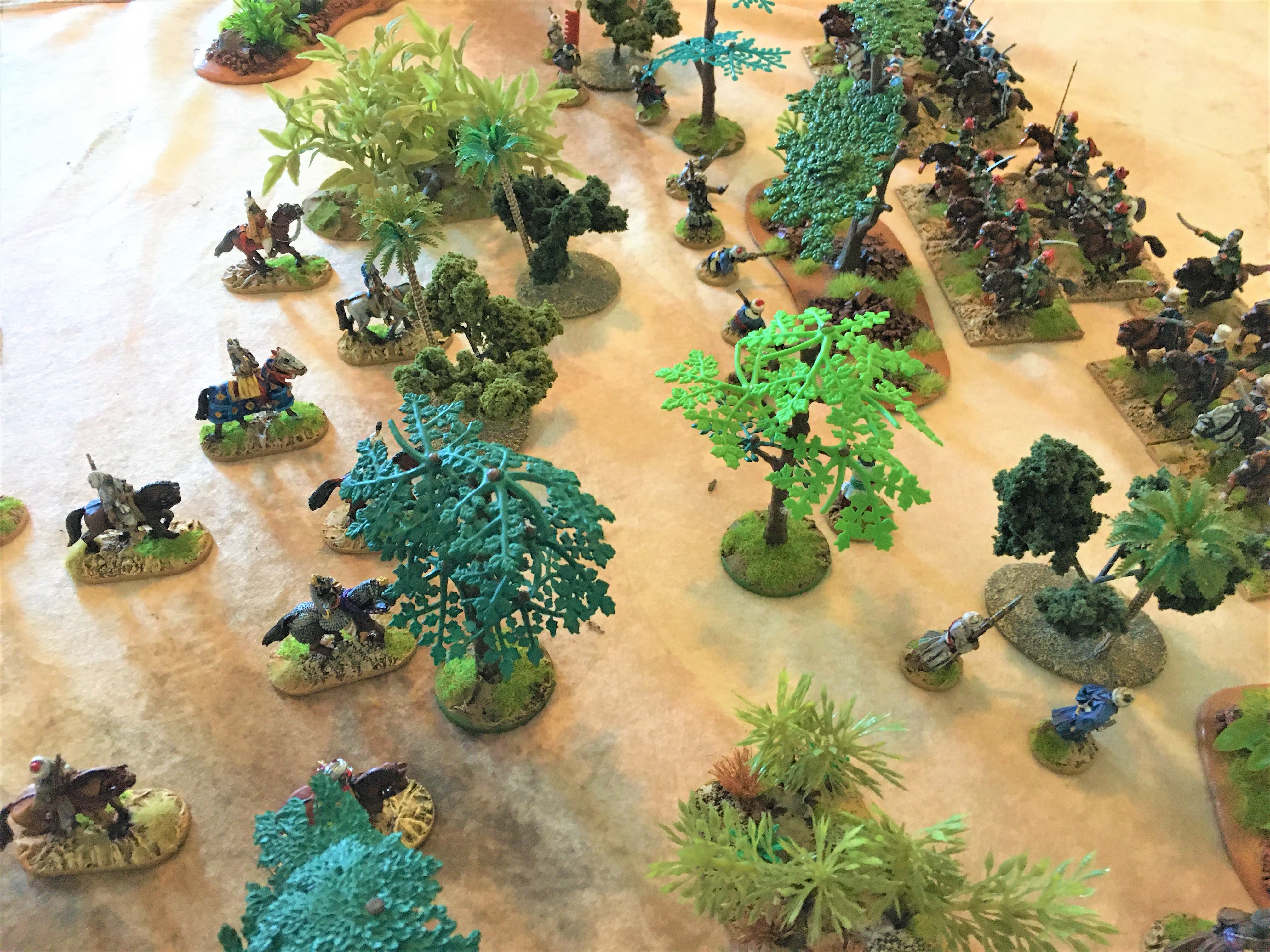
General view of the table.


So on second thoughts maybe I'll have to learn to organise my sock drawer, at least metaphorically speaking, rather than merely accept some of the historical howlers that appear in the sample armies for the scenarios in the book . There is still good stuff in the book even if much of it is hidden amongst a plethora of eye-candy and other associated fluff.

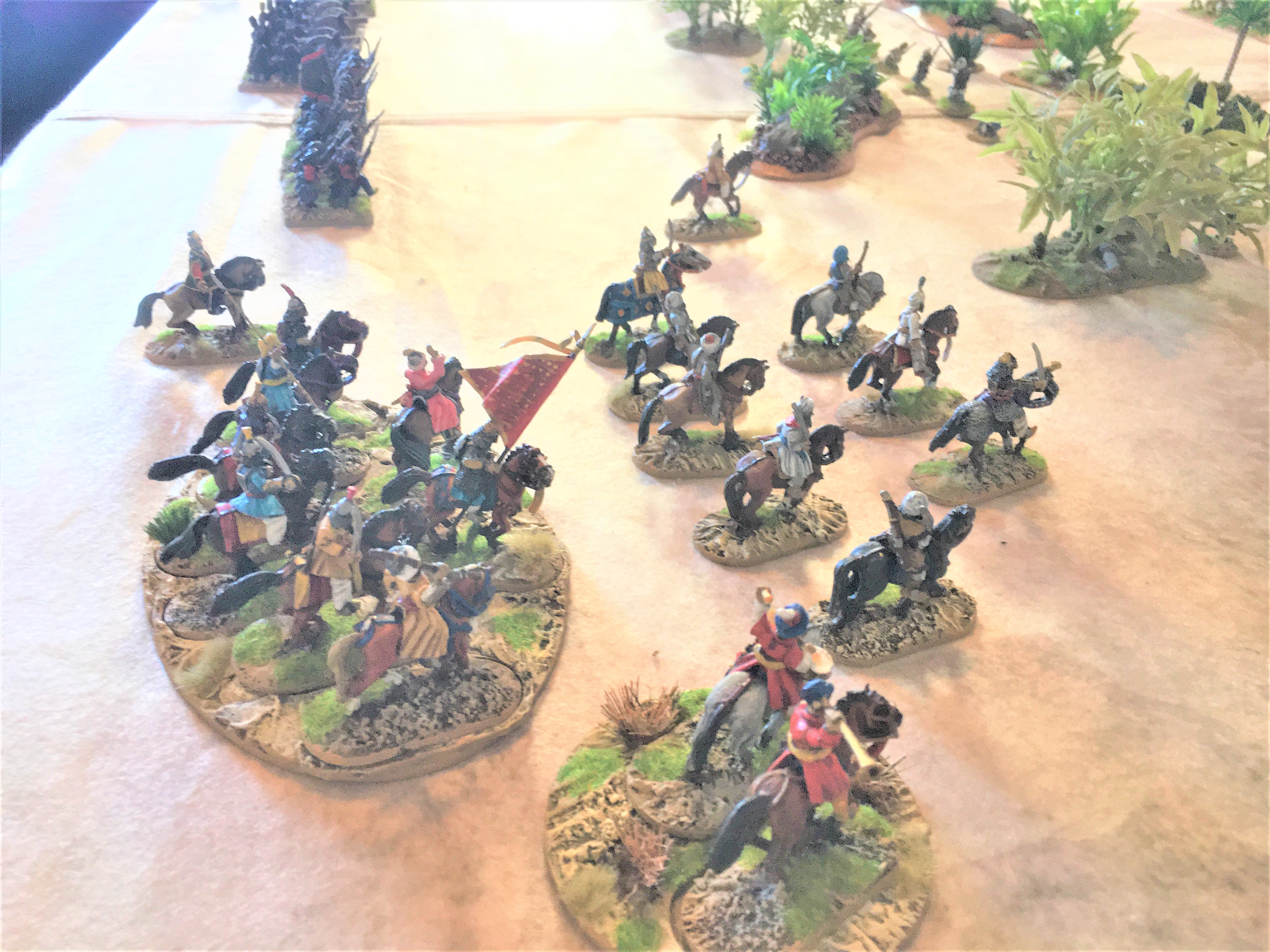
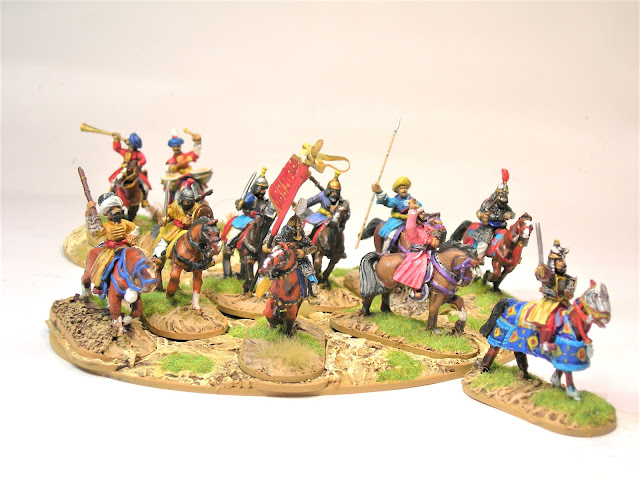
Sikh Irregular Cavalry 


Ghurkhas and 60th Rifles. 

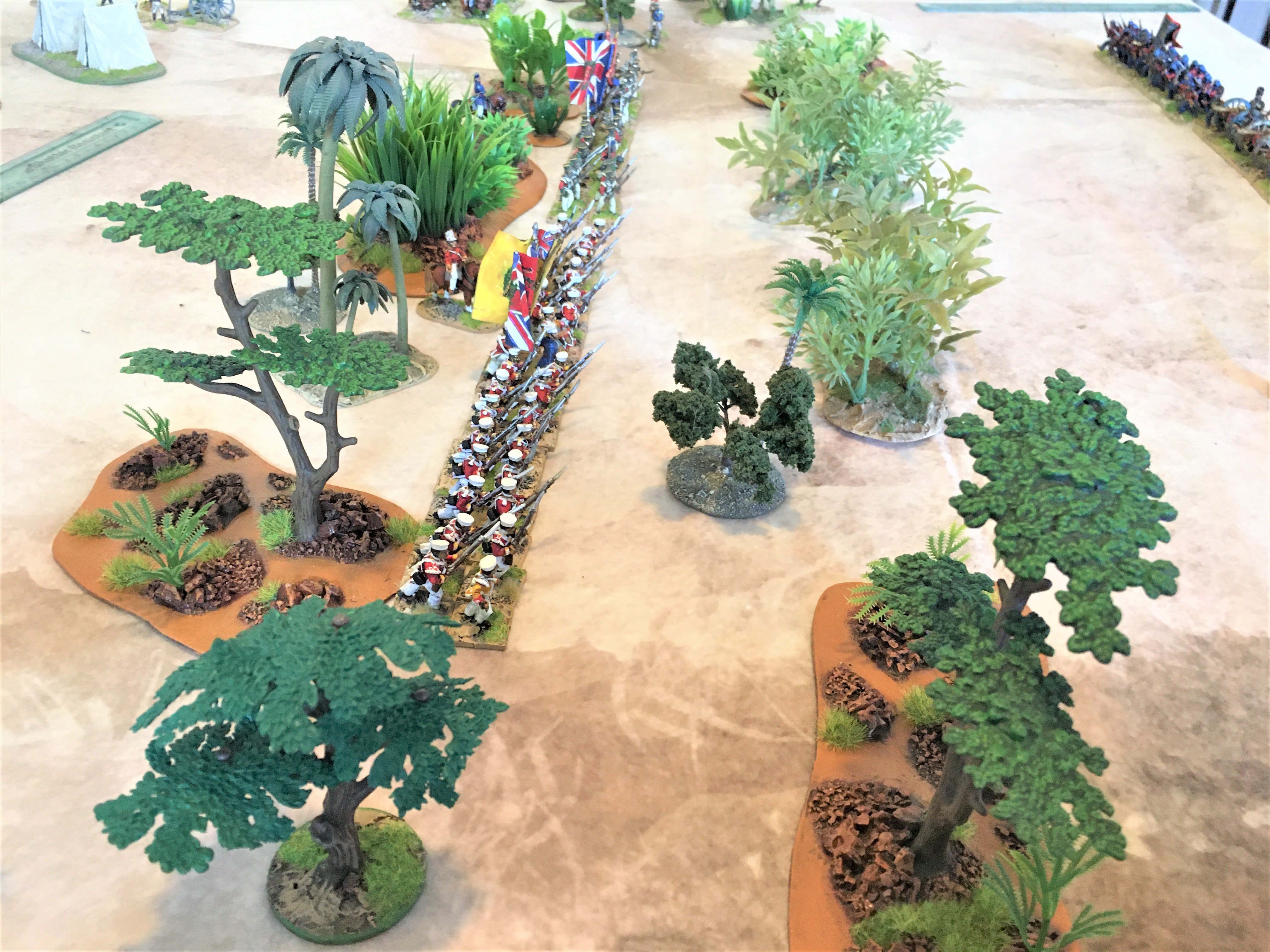
The British Line 

Jungly Bits 


So to the game ... or rather not as with all the chat and ribaldry we only did three moves. Mind you - despite the seam in the playing cloth I did rather like the look of the thing and as I get more 'India' models painted - both for the Sikh wars and of course De Boigne's campaigns there will be more spiritual visits to the warfare of that intriguing subcontinent.

Models were mostly Old Glory 28mm - though one of the sepoy units is Foundry and the Bengal Horse Artillery are old Willie 30mm. All  blend in pretty well on the table so 3mm angst can go whistle. Check out the photos  you simply can't tell. 

 So to answer my title question .....  when its a good time with your mates .

 Our thanks to Norman Oyston| (that's Andrew the Tekkies Dad)   for allowing us the use of the  new venue- we will be back. 


Sunday, 20 March 2022

Catching Up on My Reading 10

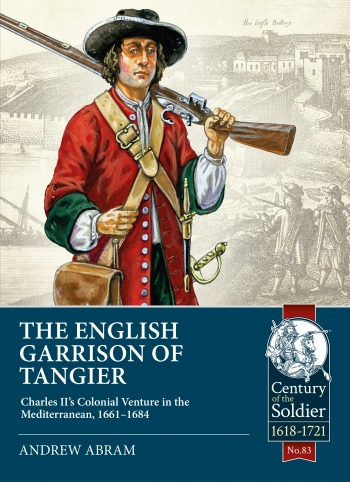
 Another late17th century title came to my attention - from Helion naturally-  this one being Andrew Abrams latest . concerning the English occupation of Tangier during the reign of Charles II.

Now unlike the last book I reviewed concerning the Late 17th century this one is no lightweight gallop through the period, and of course is all the better for that. After all  not all of us HAVE to be assumed to have the intellectual capabilities of a backward haddock surely?

 No this one is for chaps who don't need to use their fingers for the long words. Mr Abram can read and write- no mean feat these days, and it shows in the 200 plus pages of. hard information within these covers .

 The English Garrison of Tangier - Charles II 's colonial venture in the Mediterranean 1661-1684, tells you exactly what it is about right from the first page.


The depth of research is excellent in 12 chapters plus 10 appendices Mr. Abram gives us a picture of Charles II's  small restoration army and it's first colonial adventure.  The 9 page bibliography gives us a hint of where all the information comes from.

 Tangier came to Charles 11 as part of his dowry  from his new Catherine of Braganza - his new Portuguese wife- Bombay came to be a colonial possession  by the same route  but that is another story. The plan for Tangier was to make it a trading hub  and entree into the hinterland ... but the local population were not that keen to say the least. 

So Charles II was saddled with an outpost which needed a small army to keep it safe or indeed  often not so safe.

The book give us some serious detail on the garrisonand a good amount on it's Moorish opponents.. There are, for example, 54  tables giving establishments , officers names , rates of pay and provisioning details type of guns in the various forts, all the information one might need to run a brigade sized 17th century army. should you wish to do so.

As you might expect there is a fair amount of info on 17th century logistics peculiar to the Tangier Garrison but there is also a  detailed narrative  of the various actions fought by the garrison against the  Moorish  forces and the reader quite quickly realises that Tangier was a dangerous place, if the Moors didn't get you then disease, bad food and too much alcohol might. 

 Abram makes it quite clear that Tangier was no easy posting and that conditions were often grim, the garrison was frequently ignored by the home government and often held on only by the skin of its teeth and because the Moors often had their own political turmoil.

 The book is profusely illustrated in black and white with copies of contemporary illustrations and pamphlets. there are also form very fine maps. One small niggle- although the Garrison's uniforms are described, as is the dress of their Moorish opponents  it would have been nice to have some modern artwork to put these descriptions into context. This being especially true of the Moors.   However that does not really detract from the overall worth of the meaty 380 pages in this excellent volume.

  There are sufficient battles, actions and skirmishes here  to fascinate and wargamer what wants something out of the usual rut but this book is much more than  that with its depth of detail and strong narrative . For those interested in the early history of the British army it is a mine of useful information.

 Highly recommended. 


Wednesday, 16 February 2022

Pathan Cavalry and more sabots

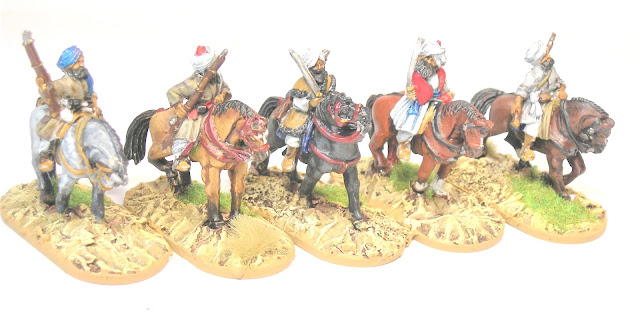
 These Pathan cavalry had been on my painting table for far too long but finally they are finished. These will join the slowly growing 'India' collection as they will suit a fairly large timespan.- especially those with the jezails rather than the 2 who have more modern rifles. . These all came straight out of the Old Glory pack CNP5 and are as they come, no fiddling about. Other from this pack will have minor conversions such as substituting a lance for the firearm and having shields added.

Pathan Cavalry - 5 variant models  from the same 10 figure pack. 


Much of my India stuff- especially that for the Mutiny- is singly based so using sabot movement bases seemed a good idea. Infantry are easy enough but cavalry can present a problem or two. This being especially true if you want something of an irregular look for Marathas or Pindaris for example. Pinched this idea from the Wargames in India FB group but decided to turn the large base into an 8 figure sabot. Bit of a faff or what ! Mind you I think it works so a few more will be made  but fiddling to get the base holes in the right place takes a bit of patience. 

The large base is an 8 figure sabot- the actual base being 170mm by 109mm  from Warbases. Getting 8 models on was a bit tricky but I do like the end result, even if the fit was not quite as good as I hoped. 


Friday, 28 January 2022

Ghurkhas

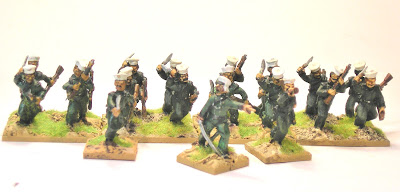
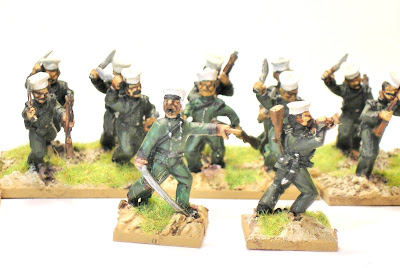
  Painting slow again but I did manage to finish a few of these Ghurkhas. These will be either the Nusseree or Sirmoor Battalion. Both fought in the Sikh War at the Battle of Aliwal - and again in the Mutiny .

 All the figures are from the Old Glory 25/8mm (depending upon if you have 3mmangst or not) Indian mutiny range. Pack CMB9


The pack includes command figures as in the close up . Next up are some Pathan cavalry but the York show Vapnartak will come first. 

Thursday, 27 January 2022

BOOK CHAT

 Tonight at 7 pm I'm giving and online book chat - under Helion's auspices on my book.

 Their Infantry and Guns will astonish You.

 Josh Provan will also be talking about his book 'Bullocks Grain and Good Madeira.

 Each of us will give a short presentation then both will be taking questions. I'm told Helion will be giving the audiencea discount price on each of our books.

 Should be fun ....

Monday, 3 January 2022

Catching up on my Reading 9

 Brazen and to the Point. 

When I was at school a very long time ago they still had history lessons where they taught you stuff. Now WHAT they taught you was often later proved to be twaddle but that is beside the point. You were expected to regurgitate it-twaddle or not- so you could pass your exams.

 Some of this was actually Military History of a sort , including the Battle of Minden  during the Seven Years War where apparently 6 battalions of British infantry shot the whole French Army to bits in the supposedly usual manner and won yet another famous victory .. oh and there were some German chaps on our side who helped a bit.

Over the years of course you find out that it wasn't quite like that ......

Nevertheless I suspect it was partly the twaddle they taught you in 1972 that was the initial spark for my interest in the  British contribution to the Seven Years War which despite some periods on the back burner has never completely  left me .

So it was with considerable interest that-

Like a Brazen Wall- The Battle of Minden and its place in the Seven Years War

 by Ewen Carmichael came to my attention  


Published by  the ever busy, Helion this is a meaty tome of some 265 pages of which not one is wasted.

I do sometimes think that the campaigns against the French in Europe during the Seven years War often get a bit of a raw deal compared to the campaigns of Frederick the Great against the Austrians and Russians. This books goes a considerable way to redressing that imbalance.

 The author clearly knows what he is about. In 16 Chapters and 6 Appendices Mr Carmichael (actually a retired Major-General and currently Chair of the Society for Army Historical research) tells the story of the famous battle and puts it firmly into the context both of the campaigns against the French and indeed the overall context of the Seven Years War in Europe.

But this is not merely an overview, the detail is all there. Orders of Battle, Uniform details,(these encapsulated in a collection of tables) lots of contemporary quotes- often from European sources as well as British ones.. The depth of Mr. Carmichael's research is all there for the reader to see.. This is a formidable book telling a sometimes complex story. What becomes admirably clear is what a very mixed force the Allied commander, Ferdinand of Brunswick actually had to draw upon and how few of his troops were actually British. The vast bulk of Brunswick's army consisting of Hanoverians, Hessians, Brunswickers and even a few Prussians.

 It is this depth of research that I found most impressive but there is yet more. There is also a Guide to the Battlefield with some useful photographs and some delightful colour plates by Patrice Courcelle showing uniforms of some of the combatants. Add to this a decent crop of maps showing both theatre operations as well as battle details and we have a book that students will rerun to again and again.

 Niggles - well no not really , if I was picky I could have wished for a few more contemporary illustrations but that really is my only 'complaint'. I heartily reccommend this book to any interested in the Seven Years War.